

How can I plan daily meals to maximize nutrition in a balanced diet for energy, weight control, and health?
Practical daily meal planning: a step-by-step system to maximize nutrition in a balanced diet
Planning daily meals that optimize nutrition in a balanced diet requires a reproducible system. Start with the target: total daily energy needs (calories) and macronutrient targets. Use simple equations: estimate basal metabolic rate (BMR) via Mifflin-St Jeor and multiply by an activity factor (1.2–1.9). Example: a moderately active 35-year-old woman, 70 kg, 165 cm: BMR ≈ 1430 kcal; maintenance ≈ 1430 × 1.55 = 2217 kcal. If weight loss is the goal, create a 10–20% deficit (220–440 kcal).
Follow the Acceptable Macronutrient Distribution Ranges (AMDR) as a starting framework: carbohydrates 45–65% of calories, protein 10–35%, fat 20–35%. For a 2,000 kcal pattern: carbs 225–325 g, protein 50–175 g, fat 44–78 g. For most adults aiming for general health, a practical distribution is 45% carbs, 25% protein, 30% fat. Specific groups adjust: endurance athletes lean higher carbs; older adults may need 1.0–1.2 g/kg protein to preserve muscle mass.
Step-by-step planning process (apply weekly):
- Set calorie target based on goals (maintenance, loss, gain).
- Choose a macro split aligned with activity and goals (e.g., 45/25/30).
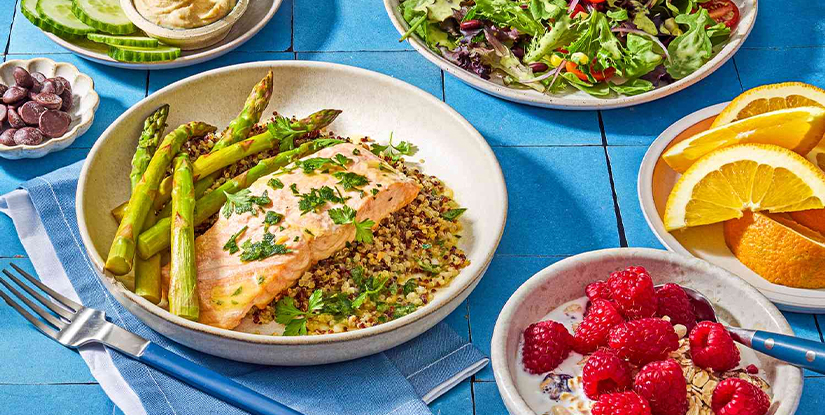
- Build a plate model for each meal: 50% vegetables + fruit, 25% lean protein, 25% whole grains/starchy veg, add healthy fats.
- Create a rotating 7-day meal list with breakfasts, lunches, dinners, two snacks; ensure variety and colors.
- Shop with portioned grocery lists and prepare batch-cooked staples (grains, legumes, roasted veg, lean proteins).
Practical examples for a 1,800 kcal weight-loss day (45/30/25):
- Breakfast (400 kcal): 1 cup Greek yogurt (150 g) + 40 g rolled oats + 1 small banana + 1 tbsp chia seeds (protein ~22 g, carbs ~55 g, fat ~9 g).
- Lunch (500 kcal): salad with 120 g grilled chicken, 2 cups mixed greens, 1/2 cup quinoa, 1/2 avocado, lemon-olive oil dressing (protein ~35 g, carbs ~35 g, fat ~22 g).
- Snack (150 kcal): 20 g almonds + 1 medium apple.
- Dinner (650 kcal): 120 g salmon, 1 cup roasted sweet potato, 1.5 cups steamed broccoli, 1 tsp olive oil (protein ~40 g, carbs ~50 g, fat ~28 g).
- Evening snack (100 kcal): herbal tea + 2 squares dark chocolate or 100 g cottage cheese if protein desired.
Visual elements description: imagine a plate divided into three colored zones—green (50% veg/fruit), beige (25% grains/starchy veg), and red (25% protein)—with a small blue circle representing healthy fats. Use a shopping matrix with columns: Produce, Protein, Grains, Fats, Extras. This simplifies grocery trips and reduces decision fatigue.
Meal prep best practices and weekly workflow
Effective meal prep reduces stress and increases adherence. Adopt a two-hour Sunday batch-cook session followed by 20–30 minute midweek refresh. Tasks to schedule:
- Batch-cook: 3–4 portions of lean protein (chicken, tofu, fish), 4 cups cooked grains (brown rice, quinoa), roast a tray of mixed root vegetables, and wash/slice salad greens.
- Portion into clear containers labeled by day and meal to improve compliance; use grams or visual cues (fist, palm) for portion sizes.
- Rotate flavors: use different dressings/spices (lemon-herb, chili-lime, turmeric-garlic) to avoid monotony—this increases long-term adherence by up to 30% in behavioral studies.
Nutrition tracking: use apps (MyFitnessPal, Cronometer) to check macro balance for 2–4 weeks, then wean off tracking once you learn portion sizes. Aim for consistent fiber (25 g/day women; 38 g/day men) and limit sodium to <2,300 mg/day.
Macronutrients, micronutrients, and specific targets: quantifying nutrition in a balanced diet
Understanding the role and quantified targets of each nutrient is essential. Macronutrients provide energy and structure: carbohydrate fuels the brain and high-intensity activity; protein repairs tissue and supports satiety; fat transports fat-soluble vitamins and supports hormone production. Micronutrients—vitamins and minerals—support enzymatic reactions, immunity, and bone health. Key statistics and targets:
- Daily fiber: 25 g (women), 38 g (men) or 14 g per 1,000 kcal.
- Protein: 0.8 g/kg/day general population; 1.2–2.0 g/kg for older adults, strength athletes, or during calorie deficit. For a 70 kg adult, that’s 56 g minimum vs. 84–140 g for active training.
- Essential fats: at least 20% of calories; include omega-3 EPA/DHA target ~250–500 mg/day from fatty fish or supplements.
- Sodium: limit to <2,300 mg/day; ideal for many is 1,500 mg/day if hypertensive.
- Vitamin D: 600–800 IU recommended, blood targets 25–50 ng/mL; many adults require 800–2,000 IU supplementation in low-sun months.
Examples of nutrient-dense food swaps to maximize micronutrient intake while keeping calories in check:
- Swap white rice for quinoa (adds ~8 g protein per cooked cup and more magnesium, iron).
- Replace processed snacks with mixed nuts + fruit (fiber, healthy fats, micronutrients).
- Add a leafy green to every meal—1 cup raw spinach provides ~30 mg calcium and multiple vitamins at ~7 kcal.
Case study: middle-aged male 45, 85 kg, desk job, wants metabolic health improvement. Baseline diet high in refined carbs and sodium. Intervention: replace SSBs with water/lemon, increase protein to 1.2 g/kg (102 g/day), add two servings of fatty fish per week, increase fiber by +10 g/day. Outcome after 12 weeks: average weight loss 4–6 kg, fasting glucose decreased by 6 mg/dL, LDL decreased 8%—consistent with meta-analyses linking fiber and reduced cardiometabolic risk.
Targeted macro distributions for common goals and a 7-day flexible template
Select a macro template based on primary goal. Examples (percent of total calories):
- General health/maintenance: 50% carb / 20–25% protein / 25–30% fat.
- Weight loss (satiety-focused): 40% carb / 30% protein / 30% fat.
- Endurance training: 55–65% carb / 15–20% protein / 20–25% fat.
- Muscle gain/strength: 45–50% carb / 25–30% protein / 25–30% fat.
Quick 7-day template (mix-and-match): breakfast options (overnight oats, omelet + veg, Greek yogurt + berries), lunches (grain bowl, hearty salad, soup + lean protein), dinners (fish/chicken + veg + whole grain), snacks (fruit+nut butter, hummus+veg, cottage cheese). Prioritize whole foods and rotate colors for micronutrient variety.
Monitoring, adjustments, and real-world applications: measuring success and iterating
Consistent monitoring is essential. Use objective and subjective metrics: body weight trends (weekly average), waist circumference (monthly), strength/performance markers (reps, distance, time), and energy/sleep/mood logs. For weight change, expect 0.25–0.5% body weight loss per week for sustainable results; faster losses often signal muscle loss or unsustainable restriction.
Step-by-step adjustment protocol (4-week cycle):
- Baseline week: record intake and metrics for 7 days to set starting point.
- Implement plan for 4 weeks with consistent meal structure and one weekly cheat-meal allowed.
- After 4 weeks, evaluate: if weight and performance are moving toward goals, maintain. If no change and adherence is good, adjust calories by 5–10% (down for loss, up for gain) or increase activity.
- If energy, sleep, or recovery decline, increase protein by 10–20 g/day or add 100–200 kcal of healthy fats/carbs to restore balance.
Real-world application: workplace strategies—pack lunches into portable containers, set reminders for 3–4 eating windows, and keep healthy snacks at desk. Restaurants: choose grilled over fried, ask for dressings on side, select whole grain or vegetable-based sides. Evidence shows behavioral nudges like prepacking food improve adherence by ~25% vs. ad-hoc choices.
Tracking tools, common pitfalls, and long-term sustainability tips
Recommended tools: digital food scales for initial learning, nutrition apps (Cronometer for micronutrient focus), simple paper logs for habit tracking. Common pitfalls include: overemphasis on calories without nutrient quality, all-or-nothing mentality, and underestimating liquid calories. To improve sustainability:
- Focus on 3–5 non-negotiable habits (protein at breakfast, 2 cups veg at lunch/dinner, water intake target).
- Use flexible dieting principles—80/20 approach: 80% of intake from whole foods, 20% flexible.
- Schedule monthly re-evaluations and celebrate performance gains, not only scale weight.
Final note: if you have medical conditions (diabetes, kidney disease, pregnancy), consult a registered dietitian or physician to tailor macros and micronutrient targets. Clinical contexts require adjustments—e.g., protein restriction in stage 4–5 CKD or carbohydrate timing for insulin management.
FAQs
1. How many calories should I eat daily to meet nutrition in a balanced diet?
Calories depend on age, sex, weight, height, and activity level. Use Mifflin-St Jeor for BMR then multiply by activity factor (1.2–1.9). For weight loss, subtract 10–20% or 500 kcal/day for a ~0.5 kg/week deficit. Prioritize nutrient density to meet vitamin and mineral needs while in a deficit.
2. What macro split ensures optimal nutrition in a balanced diet?
A general, evidence-based starting point is 45–50% carbs, 20–30% protein, 25–30% fat. Adjust based on goals: higher protein for satiety/muscle preservation, higher carbs for endurance training. Track for 2–4 weeks and refine.
3. How can I increase micronutrient intake without increasing calories?
Prioritize low-calorie, nutrient-dense foods: leafy greens, cruciferous vegetables, berries, lean proteins, legumes, and seafood. Replace empty-calorie snacks (chips, SSBs) with vegetables, fruit, and small portions of nuts or seeds to boost micronutrients without large calorie increases.
4. When should I consider supplementation versus food-first approach?
Food-first is preferred; consider supplements when dietary intake can't meet needs (e.g., vitamin D in low sun regions, B12 for vegans, iron for menstruating women with deficiency). Use blood tests and a healthcare provider to guide dosing.
5. How important is meal timing for nutrition in a balanced diet?
Meal timing matters mainly for performance and personal preference. Distribute protein evenly across meals (20–40 g per meal) to support muscle protein synthesis. Time carbs around workouts for energy and recovery. For most people, total daily intake is more important than exact timing.
6. What are practical on-the-go meal options that still meet nutrition goals?
Options include Greek yogurt + oats, prepacked grain bowls with lean protein, whole-grain wraps with veggies and hummus, mixed nuts with fruit, and protein bars with clear macros and whole-food ingredients. Pre-portion to prevent overeating.
7. How do I measure portion sizes without a scale?
Use hand-based estimates: palm = protein (~70 g cooked), cupped hand = carbs (~1/2–1 cup), fist = vegetables (~1 cup), thumb = fats (~1 tbsp). These are practical and accurate over time.
8. Can I get adequate protein on a vegetarian or vegan balanced diet?
Yes—combine legumes, whole grains, soy products, nuts, and seeds. Aim for 0.9–1.2 g/kg for active vegetarians and include a variety of sources to ensure all essential amino acids. Consider fortified foods or supplements for B12.
9. How do I handle cravings and maintain a balanced diet long-term?
Allow controlled indulgences (planned treats), increase protein and fiber to enhance satiety, and address triggers (stress, sleep). Behavioral strategies like meal planning and removing trigger foods from the home reduce impulsive eating.
10. What are signs my diet lacks key nutrients?
Common signs: fatigue, hair loss, poor wound healing, frequent infections, brittle nails, or anemia. These may indicate deficiencies—iron, zinc, protein, vitamin D, or B vitamins—and warrant testing and dietary correction.
11. When should I see a professional about my diet?
Consult a registered dietitian or physician when you have chronic disease (diabetes, heart disease), unexplained weight changes, restrictive eating patterns, or if you plan major dietary changes (pregnancy, competitive athletics). Professionals provide personalized, evidence-based plans that optimize nutrition safely.